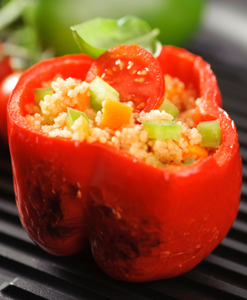
The key to eating well is to enjoy a variety of nutritious foods from each of the five food groups.
These five food groups make up the Australian guide to healthy eating (see right).
Foods are grouped together because they provide similar amounts of the key nutrients of that food group. For example, the key nutrients of the milk, yogurt, cheese and alternatives food group include calcium and protein, while the fruit group is a good source of vitamins, especially vitamin C.
To meet the nutrient requirements essential for good health, you need to eat a variety from each of the five food groups daily, in the recommended amounts. It is not necessary to eat from each food group at every meal. In fact, in some instances, you only need to eat some of the foods in each food group a couple of times a week. Take a look at Guideline 2 and discover the wide variety of choices within the five groups.
It is also important to enjoy a variety of foods within each of the five food groups because different foods vary in the amount of the key nutrients that they provide. For example, in the vegetables and legumes food group, orange vegetables such as carrots and pumpkins contain significantly more vitamin A than other vegetables such as white potatoes.
Let’s take a look at the five food groups and discover the incredible variety and the abundance of choice there is when eating from these groups.
More information on the five food groups:
How much do we need each day?
The Australian dietary guidelines inform people of different ages, life stages and gender, the minimum number of serves from each food group they need to eat each day, to make sure they get the full amount of nutrients their body needs.
Most people who want to lose weight should stick to the minimum number of serves. However, people in their healthy weight range, who are taller than average or more physically active, may find they need extra serves from the five food groups.
Ideally, most of the extra serves should be chosen from the vegetables, fruit and grain (cereals) food groups but some extra choices can be made from milk, yoghurt, cheese and/or alternatives, the lean meat and poultry, fish, eggs and/or alternative group, and including less often, unsaturated fats/oils/spreads. Discretionary choices are often an enjoyable part of the Australian diet, and can be included occasionally if your energy needs allow this.
Often people find that to get enough serves from all the food groups they need to:
- swap discretionary choices for foods from the five food groups
- make breads or grains part of at least two meals most days
- include vegetables at least twice a day, particularly important if you would like to lose weight
- make vegetables take up at least one third of meals and half the meal if you are trying to lose weight. So it’s important to serve vegetables or salad as a side dish even when eating meals like pasta, lasagne or risotto. By eating more vegetables in your meals, serves of other foods will be smaller and the overall meal will have fewer kilojoules.
- include lean meat or meat alternative as part of at least one meal a day
- add fruit to at least two meals or use as snacks or desserts
- include a serve of low fat milk, yoghurt or cheese as a significant part of at least two meals or snacks.
It’s also good for your health to include:
- fish meals every week
- meals with legumes every week
- a wide variety of different coloured vegetables every day.
More information on this topic:
Fat, salt, sugar, alcohol
ealthier. It can help us manage our weight better and reduce our risk of chronic diseases like heart disease, stroke, Type 2 diabetes, some cancers and chronic kidney disease.
This is why foods that are high in saturated fats, added salt, added sugars or alcohol are called discretionary choices. They also tend to be low in fibre and important nutrients like vitamins and minerals.
These foods are important for celebrating and social occasions, but should be limited to small amounts and only eaten sometimes.
How do I work out what foods to eat?
The Australian dietary guidelines and Australian guide to healthy eating have been reviewed to make sure they are based on most current scientific evidence. This means they can be used to assess popular claims about food and health and to work out what is true.
It can be tricky when different people are giving conflicting advice about healthy eating. It can be hard to know what to believe.
The following tips provide a few simple facts that can make it easier to pick the information that is most helpful.
More information on fat, salt, sugars and alcohol
Discretionary food and drink choices
What are discretionary food choices?
Some foods and drinks do not fit into the five food groups because they are not necessary for a healthy diet and are too high in saturated fat and/or added sugars, added salt or alcohol and low in fibre. These foods and drinks can also be too high in kilojoules (energy). Many tend to have low levels of essential nutrients so are often referred to as ‘energy-dense’ but ‘nutrient-poor’ foods. The problem is that they can take the place of other more nutritious foods. Also, the higher levels of kilojoules, saturated fat, added sugars, added salt and/or alcohol that they contain are associated with increased risk of obesity and chronic disease such as heart disease, stroke, type 2 diabetes, and some forms of cancer.
It is easy to have too much and too many of these foods and drinks, and many people do. If you are trying to lose weight, you are unlikely to be able to fit these foods into your lower kilojoule target. However, for people in their normal weight range, these foods and drinks in occasional, small amounts, can add variety and enjoyment to eating. These ‘optional’ foods and drinks are referred to as ‘discretionary choices’.
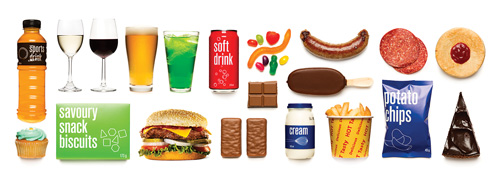
‘Discretionary’ foods and drinks include sweet biscuits, cakes, desserts and pastries; processed meats and fattier/salty sausages; sweetened condensed milk; ice cream and other ice confections; confectionary and chocolate; savoury pastries and pies; commercial burgers with a high fat and/or salt content; commercially fried foods; potato chips, crisps and other fatty and/or salty snack foods including some savoury biscuits; cream, butter and spreads which are high in saturated fats; sugar-sweetened soft drinks and cordials, sports and energy drinks and alcoholic drinks.
Eating well
Australians have access to a wide range of foods, but most of us need to choose foods and drinks more wisely to help protect our health.
It can be hard to choose nutritious foods and drinks, especially when foods and drinks high in saturated fat, added sugars, added salt and alcohol are readily available and affordable, and the environment in which we live promotes over-consumption.
Aim for a healthy lifestyle – make positive choices and take control of your health. Look at all your areas of wellbeing and don’t just focus on your weight. Feel good about yourself for making small changes – these can lead to big improvements.
Tips for eating well
The recommendations in the Australian dietary guidelines and Australian guide to healthy eating help us choose foods for good health and to reduce our risk of chronic health problems.
If we are carrying extra weight, the Australian dietary guidelines can also help us lose weight. They steer us towards foods that are high in nutrients but lower in kilojoules. These choices are nutrient dense but less energy dense and helpful for both achieving and maintaining a healthy weight.
People wanting to lose weight will also find this information useful for planning meals and snacks. Following the recommended number of serves from the five food groups and avoiding the discretionary foods will result in a gradual but healthy weight loss for most people. However, some people, particularly younger men and people who are taller than average or more active, may need additional serves of the five food groups.
You can also check by taking the ‘Are you eating for health?’ quiz in the Dietary guidelines summary booklet.
Eating regularly
It’s essential for weight control and especially weight loss, to recognise and act on the feedback your body gives you about when and how much you need to eat. However it’s also important to aim for a regular eating pattern of meals, or meals and mid meals.
A planned pattern of eating is more likely to include the recommended number of serves from the five food groups. A spontaneous, unstructured eating pattern is more likely to include too many discretionary foods which means too much saturated fat, added sugars, added salt and kilojoules at the expense of fibre and important nutrients.
Don’t skip breakfast?
Breakfast skippers are more likely to be tempted by unplanned discretionary choices during the morning and large serves at the next meal or snack. Just think of how yummy those large baked muffins look at morning tea if you’ve missed breakfast!
People who regularly eat a breakfast based on wholegrain cereal or bread, low fat milk or yogurt and maybe some fruit or vegetables are much more likely to be eating well and lose weight than those who skip breakfast.
Eat with other people not TV
We also know that people who eat with others and eat at the dining table, are more likely to eat regularly and eat well than those who eat alone or in front of the TV. Meals with others tend to include more foods from the five food groups. For example, people often report that they can’t be bothered cooking vegetables just for themselves.
Television watching is associated with eating more discretionary choices like take-away or convenience foods and fewer foods from the five foods. It also makes it much more difficult to recognise and respond to our body’s signals about hunger and satiety.
Good meal planning and making healthy choices can sometimes be tricky but a few useful tips can make it easier.
More information on this topic:
Healthy eating throughout all of life
The Australian dietary guidelines will help people of all ages make the best food and drink choices for good health and avoid health problems. However, there are also some special messages for people at different stages of life because their bodies are changing.
Healthy eating for infants, children and teenagers
Infants, children and teenagers have special food needs because they are growing and developing. They also need extra energy for playing and being more active.
Healthy eating when you’re pregnant or breastfeeding
When you’re pregnant or breastfeeding, you and your baby need extra nutrients, but not a lot of extra kilojoules. This means it’s very important to choose foods that are nutrient dense but not energy dense.
Healthy eating when you’re older
As we get older we often need fewer kilojoules because we are less active than when we were younger. However, we still need a similar amount of nutrients, sometimes more.
How to understand food labels
Food labels can be very confusing and tricky to understand. Often we don’t have the time to spend trying to work out what they mean and how to use them.
However, a few quick tips can make shopping for healthy food a whole lot easier and quicker and can help you lose weight. Knowing what nutrition information to look for, can help you make the best choice for your health and avoid unnecessary saturated fat, added salt, added sugars and kilojoules.
Labels on most packaged food must meet strict requirements that include information for people with food allergies, food additive listings and food storage instructions. More information about food labelling requirements can be found at Food labels – What do they mean? Food standards Australia and New Zealand.
While food labels can carry many different types of information, the main things to look at when choosing healthy food are the Nutrition information panel.
Nutrition information panel
Refer to Foods Standards interactive labelling poster.
The Nutrition information panel on a food label offers the simplest and easiest way to choose foods with less saturated fat, salt (sodium), added sugars and kilojoules, and more fibre. It can also be used to decide how large one serve of a food group choice or discretionary food would be and whether it’s worth the kilojoules. This is particularly important if you are trying to lose weight.
First use the Australian guide to healthy eating to decide whether a food belongs in the five food groups and is an ‘everyday’ food for eating regularly, or a discretionary food best eaten only sometimes or in small amounts.
Then use the Nutrition information panel to compare similar packaged foods and to decide which product provides less saturated fat, salt (sodium), added sugars and kilojoules per 100gm and more fibre per serve.
Using Nutrition information panels to help you lose weight
If we want to lose weight, it’s best to avoid discretionary foods as they provide few nutrients but plenty of kilojoules. However, it is still possible to include small serves of discretionary foods, eaten occasionally and savoured by eating slowly and enjoying the food with all our senses.
The trick is to choose only the foods or drinks that we really enjoy. Some people have a sweet tooth or love chocolate, others prefer savoury and love a great cheese. Other people really enjoy a wine sipped slowly. All food is not equally special for us. We all have our favourites.
The Nutrition information panel can help us decide if a food is really ‘kilojoule worthy’. Beware of foods that look like a single serve, but actually contain several servings in one packet. Once we know the kilojoules in a serve, we can weigh up whether our enjoyment warrants the extra kilojoules.
Health star rating (HSR) system
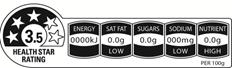
The Health star rating (HSR) system is a front-of-pack labelling scheme developed for use in Australia and New Zealand to ‘provide convenient, relevant and readily understood nutrition information and/or guidance on food packs to assist consumers to make informed food purchases and healthier eating choices’. Health star ratings will make it much easier for shoppers to make informed choices about healthier food options.
The HSR on the front of food packages provides an at-a-glance overall rating of the healthiness of the food product (reflected as a star rating), as well as specific nutrient and energy information. The more stars, the healthier the choice.
Generally, the HSR will provide the most useful source of comparison between similar food products (e.g. comparing packaged breakfast cereals). Where the nutrient icons are also displayed, they will provide information about the energy content of a product, as well as the levels of saturated fat, sodium (salt) and sugars, to help you make the best choice to suit your personal circumstances. In some cases, a positive nutrient icon (e.g. fibre) may also be displayed to provide you with additional information to help you choose the right product for you.
The HSR system was developed by Australian, state and territory governments, industry, public health and consumer groups.
Ingredients list
All ingredients in a food product must be listed on the label in order (Food labels – What do they mean? Food Standards Australia and New Zealand, from largest to smallest by weight.
You can use this to spot foods that might be high in saturated fat, added salt or added sugars because these ingredients are listed in the top three. Also look out for other words on the ingredients list that flag ingredients high in saturated fat, added salt or added sugars.
Using the ingredients list to help you lose weight
To lose weight we need to eat and drink fewer kilojoules than our bodies use. The kilojoules can come from one source or a combination of fat, sugars, protein, carbohydrate or alcohol. It’s the overall kilojoule total that matters for weight loss, rather than the source of the kilojoules. However, if fat or sugars are high on the list of ingredients, it is a good reason to check how high the kilojoules are in the amount you would eat.
Nutrition content claims
Sometimes labels will include nutrition content claims like ‘low fat’, ‘reduced salt’ or ‘high fibre’. These claims can only be used if the food meets certain criteria. For example, with a ‘good source of calcium’ claim, the food must contain more than a set amount of calcium. While nutrition content claims can generally guide you to healthier choices, it is important to check the claim by looking at the Nutrition information panel. For example, products carrying ‘low fat’ claims may not be low in total energy (kilojoules) when compared with similar products.
Health claims
Different to nutrition content claims, health claims link a food, or a nutrient or substance in a food, to a health effect. There are two types of health claims:
- General level health claims refer to a nutrient or substance in a food and its effect on a health function. For example: calcium is good for bones and teeth.
- High level health claims refer to a nutrient or substance in a food and its relationship to a serious disease or to a biomarker of a serious disease. For example: Diets high in calcium may reduce the risk of osteoporosis in people 65 years and over. An example of a biomarker health claim is: Phytosterols may reduce blood cholesterol.
A new standard to regulate nutrition content and health claims was gazetted in January 2013 (Standard 1.2.7 – Nutrition, health and related claims). There is a three year transition period which means that by 18 January 2016, foods carrying nutrition content claims, health claims and endorsements will need to comply with the new Standard. Click here for an overview of Standard 1.2.7 from the Food Standards Australia and New Zealand website.
Standard 1.2.7 ensures consumers and health professionals can have confidence that health claims are well supported by scientific evidence, and it helps consumers make informed food choices. Health claims are only permitted on foods that meet certain nutrition criterion, thereby preventing health claims on food higher in saturated fat, sugar or salt.
Percentage daily intake
Some labels also list nutrients in a serve of the product as a percentage of daily nutrient intake. This can be used to compare the nutrients in one serve of the food with what an ‘average adult’ needs. Like nutrition claims, this information can give you a rough guide, but your individual needs, particularly kilojoules, could be quite different.
The tables below offer a simpler way to work out how a food fits with your nutrient and energy requirements for a day. It can also be used to plan meals and snacks to lose weight if extra serves and discretionary foods are avoided.
Minimum recommended average daily number of serves from each of the five food groups
Healthy recipes
Trying out new meal and snack ideas and recipes based on the recommendations from the Australian dietary guidelines and the Australian guide to healthy eating is a great way to make healthy choices and lose any extra weight.
Each recipe included here, combines foods from different food groups and uses a variety of foods within each group.
To know how much to eat, check out the number of serves from each food group that you need for your age and sex.
Recipes
Recipe modification tips
Favourite and traditional recipes can often be modified to include more fibre, more fruit and vegetables and less saturated fat, added sugars, added salt and kilojoules.
Steps to work out how much to eat from a recipe
- Look at the recipe ingredients.
- Classify the ingredients according to their food groups and use the serve sizes information to work out the total number of serves from each food group in the recipe.
- Divide the total from each food group by the number of people served by the recipe.
- This will tell you how many serves from each food group are in each ‘serve’ or the recipe and help you decide on each person’s portion size.
Here’s an example of how it works
Someone wanting to lose weight should aim to eat only the number of serves from each food group recommended in the tables below and avoid extra serves and discretionary foods and drinks. By doing this, you would eat fewer kilojoules than what your body uses and lose weight gradually while staying healthy.
Minimum recommended average daily number of serves from each of the five food groups
If you have extra weight to lose, it is very useful to remember to always serve yourself half a plate of coloured vegetables or salad first. Then think about how large a portion from the recipe you need to feel satisfied, but not full. The extra vegetables will fill you up for fewer kilojoules.