




Common Cold, Flu, Allergies, Sinuses,
Rhinitis & Sneezing

Medical Library Basics: Colds & Flu (MedlinePlus)
TeenThreads mission: No panic. No misinformation. Just clear facts — so you can tell the difference between a cold, flu, allergies, and sinus problems, and know when it’s time to get help.
Important: This page is educational and does not replace medical care. If symptoms are severe, fast-worsening, or scary, seek urgent care.
Quick Jump
- What These Conditions Are
- Normal vs Not-Normal (Red Flags)
- Cold vs Flu vs Allergies (Quick Compare)
- Common Cold
- Flu (Influenza)
- Allergies
- Rhinitis (Allergic & Nonallergic)
- Sinuses & Sinusitis
- Sneezing: Common Causes
- Treatment & Relief
- Prevention & Staying Well
- When to See a Clinician
- Trusted Resources
What These Conditions Are
Many teens get congestion, sneezing, and sore throats — but the cause matters. Some are caused by viruses (like the common cold or flu),
while others are triggered by allergens or irritation (like allergies or nonallergic rhinitis). Sinusitis can happen after a cold or when
swelling blocks normal sinus drainage.
Trusted overviews:
MedlinePlus – Colds and Flu
MedlinePlus – Allergies
MedlinePlus – Sinusitis
NIH Flu, Cold or Something Else?
Normal vs Not-Normal (Red Flags)
Often Normal (Common, Usually Not Dangerous)
- Sneezing, runny nose, mild sore throat
- Stuffy nose for a few days with a cold
- Mild cough that improves over 1–2 weeks
- Itchy eyes/nose during allergy season
- Low fever with a cold (some people), especially early on
Get Checked Soon (Possible Red Flags)
- Difficulty breathing, wheezing, or fast breathing
- Chest pain, blue lips/face, or severe weakness
- High fever or fever that lasts several days
- Severe headache, stiff neck, confusion, or fainting
- Sinus symptoms that last > 10 days without improving, or “improve then suddenly get worse”
- Severe face pain/swelling or swelling around the eyes
- Dehydration signs (very dry mouth, dizziness, peeing much less than normal)
CDC – Flu Symptoms & Emergency Warning Signs
CDC – Sinus Infection (when to seek care)
Could this be Covid-19, or just an allergy?
Could this be Covid-19, or just an allergy?
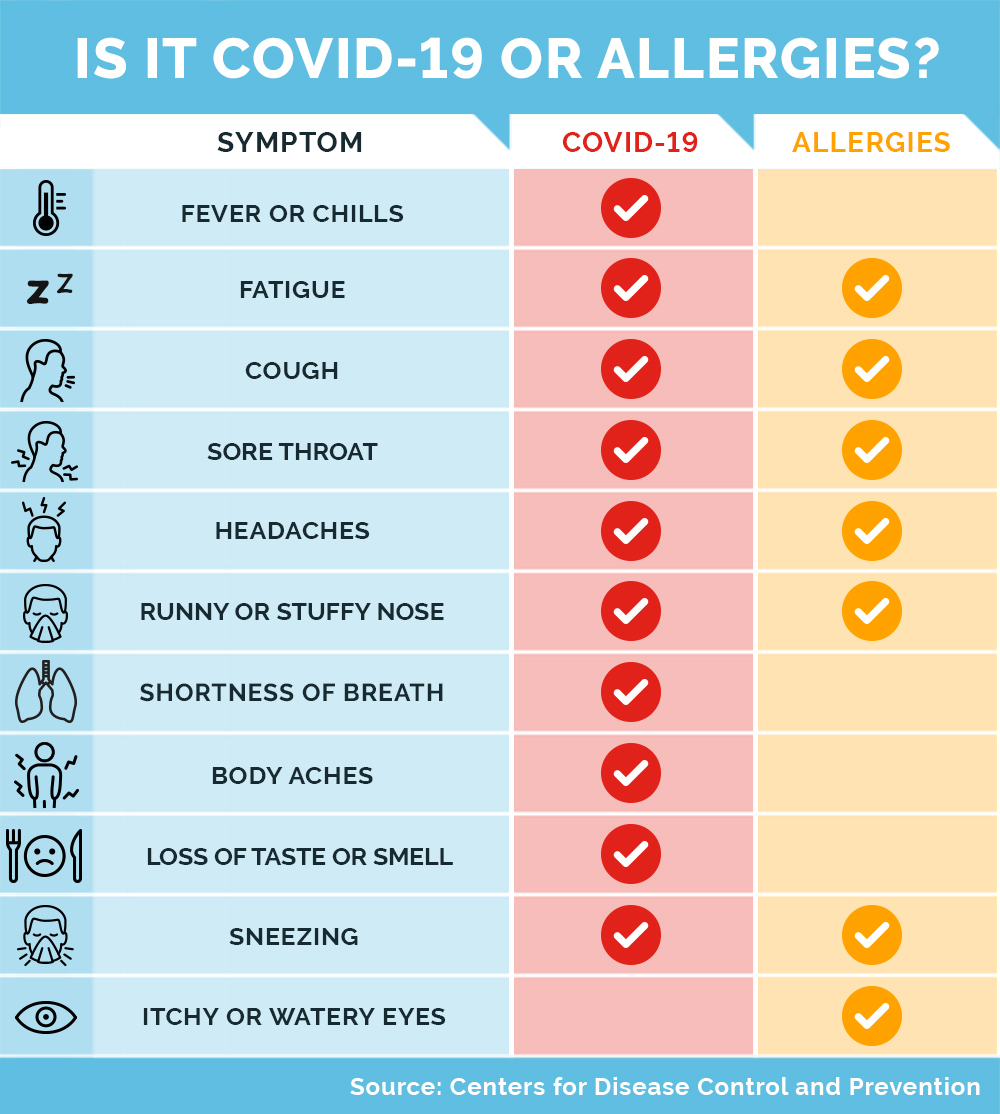
Could this be a common Covid-19,
seasonal allergies,
common cold, flu?
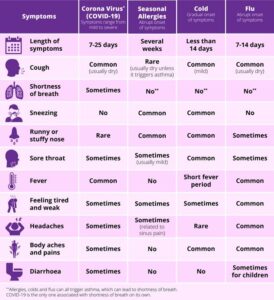
Quick Comparison
Source: AllergyFree
Cold vs Flu vs Allergies (Quick Comparison)
Fast “Clue Check”
- Cold: gradual start; stuffy/runny nose, sore throat, mild cough; usually mild fatigue.
- Flu: often hits fast; fever, body aches, chills, strong fatigue; cough is common.
- Allergies: no fever; itching (eyes/nose), sneezing, clear runny nose; symptoms repeat with triggers.
- Sinusitis: facial pressure/pain, thick nasal drainage, congestion; can follow a cold.
Common Cold
The common cold is a viral infection that affects the nose and throat. Most colds improve in about a week, but a cough can last longer.
- Runny or stuffy nose
- Sore throat
- Sneezing
- Mild cough
- Sometimes low fever and mild tiredness
Trusted basics:
MedlinePlus – Common Cold
Flu (Influenza)
The flu is also a viral infection, but it can be much more intense than a cold. It often starts suddenly and can cause fever, strong aches,
and major fatigue. Some people are at higher risk for complications.
- Fever or feeling feverish/chills
- Body aches
- Cough and sore throat
- Strong fatigue
- Sometimes vomiting/diarrhea (more common in kids/teens than adults)
Trusted basics:
CDC – Influenza (Flu)
MedlinePlus – Flu
Allergies
Allergies happen when your immune system reacts to something that is usually harmless (like pollen, dust mites, mold, or pet dander).
Allergy symptoms can look like a cold, but allergies usually do not cause fever.
- Sneezing
- Itchy nose/eyes/throat
- Runny nose (often clear)
- Watery eyes
- Congestion
Trusted basics:
MedlinePlus – Allergies
CDC – Asthma (allergies can be linked for some people)
Rhinitis: Allergic & Nonallergic
Rhinitis means inflammation inside the nose. It can be allergic (triggered by pollen, pets, dust) or nonallergic
(triggered by irritants like smoke, strong scents, weather changes, or infections).
- Stuffy nose
- Runny nose
- Sneezing
- Postnasal drip (mucus dripping down the throat)
MedlinePlus Encyclopedia – Rhinitis
Sinuses & Sinusitis
Your sinuses are air spaces in the bones around your nose. Sinusitis can happen when swelling blocks drainage and germs grow.
Most sinus infections start after a cold or allergy flare.
Common sinus symptoms
- Facial pressure/pain (cheeks, forehead)
- Thick nasal discharge
- Stuffy nose that won’t clear
- Reduced sense of smell
- Cough (often worse at night from postnasal drip)
Clues it may need evaluation
- Symptoms last more than 10 days with no improvement
- Severe symptoms (high fever, intense face pain)
- Symptoms improve, then suddenly get worse
MedlinePlus – Sinusitis
CDC – Sinus Infection (Antibiotic Use & When to Seek Care
Sneezing: Common Causes
Sneezing is a body reflex that helps clear irritants from the nose. It’s common and usually not dangerous.
- Colds (viruses)
- Allergies (pollen, dust mites, pets)
- Smoke, strong fragrance, cleaning chemicals
- Dry air
- Rhinitis (allergic or nonallergic)
Allergies vs seasonal flu, cold, & ither viruses.
Dr. Chris Thompson discusses the symptoms and differences between allergies and the seasonal flu, a cold, or other viruses.

[Source: Aspire Allergy & Sinus]
Treatment & Relief: Safe & Teen-Realistic
1) Comfort care for colds & mild symptoms
- Rest + fluids: helps your body recover
- Warm drinks: can soothe sore throat
- Honey for cough (only if you’re older than 1 year)
- Saltwater gargle: can calm throat irritation
- Humidified air: can ease congestion in dry climates
2) Congestion & sinus pressure basics
- Saline nasal spray can help loosen mucus
- Warm shower/steam may ease stuffiness
- Head elevation can help at night
3) Allergy control basics
- Limit triggers (pollen, dust, pets) when possible
- Shower after heavy pollen exposure
- Keep windows closed during high pollen days
Medicine safety note: If you use over-the-counter medicine, follow the label exactly. Do not take extra doses to “knock symptoms out.”
If you have asthma, chronic illness, or take other medicines, ask a clinician/pharmacist first.
Trusted symptom-care resources:
MedlinePlus – Cough
MedlinePlus – Sore Throat
MedlinePlus – Nasal Congestion
Prevention & Staying Well
- Handwashing: one of the best ways to reduce spread of viruses
- Cover coughs/sneezes: with tissue or elbow
- Stay home when sick (when possible) to protect others
- Sleep + hydration: helps immune function
- Flu vaccine: lowers risk of flu and severe outcomes
CDC – Prevent Seasonal Flu
CDC – Flu Vaccine
When to See a Clinician
- Breathing feels hard, tight, or wheezy
- High fever or fever that won’t go away
- Severe sore throat with trouble swallowing or drooling
- Severe headache, stiff neck, confusion, or fainting
- Sinus symptoms last > 10 days or suddenly worsen after improving
- Signs of dehydration or you can’t keep fluids down
- You have a medical condition that raises complication risk (ask your clinician)
CDC – Flu Symptoms & Warning Signs
MedlinePlus Encyclopedia – Fever
Trusted Resources
- MedlinePlus – Common Cold
- MedlinePlus – Flu
- CDC – Influenza (Flu)
- MedlinePlus – Allergies
- MedlinePlus – Sinusitis
- CDC – Sinus Infection (Antibiotic Guidance)
- CDC – Flu vs Cold
TeenThreads Final Word
Sniffles are common, but guessing wrong can lead to the wrong choices. The power move is noticing patterns:
flu hits hard and fast, allergies itch and repeat, colds usually build slowly, and
sinus issues often come after congestion.
If your symptoms are intense, long-lasting, or affecting breathing, get help – early care is smart care.
TeenThreads note: This page is curated for teens using trusted government and medical library sources.
Last updated: February 5, 2026
TeenThreads Content Team